If a builder, certifier or council has told you that you need a “dilapidation report” before your project can start, you are probably wondering exactly what that means — and what it is going to cost you. This guide explains what a dilapidation report actually is, what goes into one, and how much you can expect to pay in NSW.
If you have already been told a report is a condition of your approval and you just want it organised, you can skip straight to talking to our team — but if you want to understand what you are paying for first, read on.
What Does “Dilapidation” Actually Mean?
“Dilapidation” simply means the existing state of wear, damage or deterioration of a building or structure. A dilapidation report, then, is a formal record of the current condition of a property at a specific point in time — almost always before nearby construction, excavation or demolition begins.
Think of it as a detailed “before” photo album with professional notes attached. Its entire purpose is to create an objective, time-stamped baseline so that if anyone later claims your work damaged a neighbouring property, there is clear evidence of what condition that property was already in.
What Is Included in a Dilapidation Report?
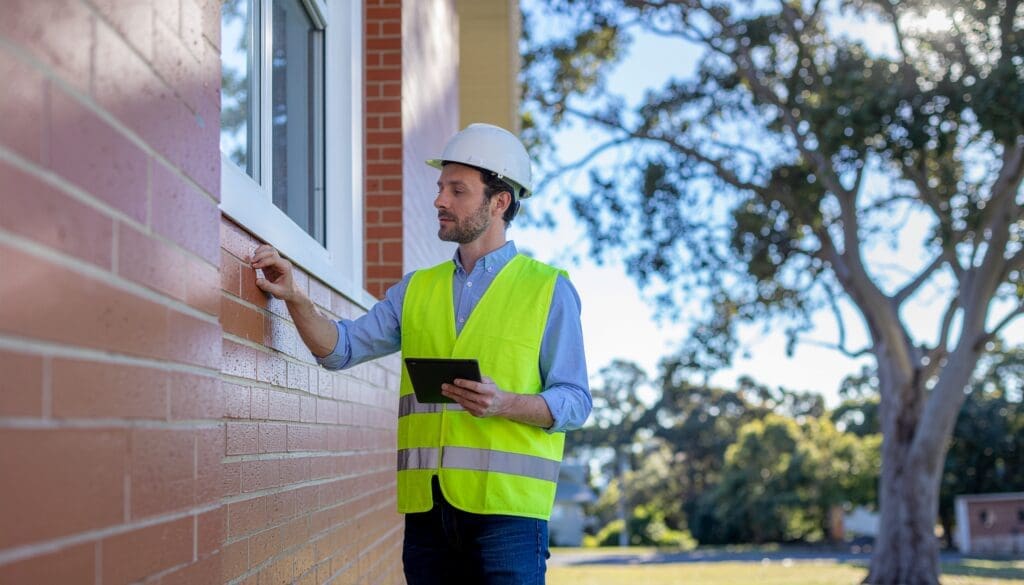
A dilapidation report records the existing condition of each inspected property in detail. It combines written descriptions of wear, cracking and damage, high-resolution photographs, records of driveways, fences and retaining walls, internal observations where access is granted, a clear site reference, and a dated, signed inspector's record so the document is verifiable in a dispute.
A professional dilapidation report is far more than a few phone photos. A thorough report prepared by a building consultant typically includes:
- Detailed written descriptions of the condition of each inspected property
- High-resolution photographs of existing cracks, movement, water damage and general wear
- Records of the condition of driveways, paths, fences, retaining walls, gardens and external surfaces
- Internal observations where access is granted (walls, ceilings, cornices, tiling)
- A clear site or location reference for each property inspected
- Date, time stamp, inspector details and signature, so the record is verifiable
The result is a document that can stand up if a dispute ever reaches your insurer, a tribunal or a court. That defensibility is the whole point — a vague or incomplete report offers little protection.
What's the Difference Between Pre- and Post-Construction Reports?
A dilapidation report has two stages. The pre-construction report is the baseline, completed before any work begins, and it cannot be done after the fact. The post-construction report is an optional follow-up after works finish, comparing the property against that baseline to confirm whether new damage occurred — the step that turns a baseline into proof.
Most people only think about the report they need before work starts — the pre-construction (or “baseline”) report. But there are two stages worth knowing about:
- Pre-construction report: completed before any work begins. This is the critical one and cannot be done after the fact.
- Post-construction report: an optional follow-up after works finish, comparing the property against the baseline to confirm whether any new damage occurred. This is what turns a baseline into proof.
Who Typically Needs One?
Dilapidation reports are most commonly required — or strongly recommended — for excavation near a boundary, demolition, large builds on tight blocks, multi-unit and commercial work, and projects where development consent conditions specifically ask for one. For a full breakdown of when a report is effectively required by councils and certifiers in NSW, see our companion guide, “Do You Need a Dilapidation Report Before Construction in NSW?”
How Much Does a Dilapidation Report Cost in NSW?
The cost of a dilapidation report in NSW depends on three things: how many properties must be inspected, the size and complexity of each, and the location. With East Coast Building Consultants, dilapidation reports start from $330, with multiple or larger sites costing more. We price each job on its scope — contact us for a quote.
Cost depends on three things: how many properties need to be inspected, the size and complexity of each, and the location. As a general guide for the Northern Rivers region:
- A single neighbouring property is usually the most affordable option, starting from $330.
- Multiple adjoining properties — common on tight urban blocks — increase the cost proportionally, as each requires its own inspection and documentation.
- Larger, commercial or multi-unit sites cost more again, reflecting the additional inspection time and reporting detail involved.
It is worth keeping the figure in perspective. The cost of a single damage dispute — legal fees, repairs and project delays — dwarfs the cost of a report. For most builders and developers the report is also a deductible project expense. In short, it is one of the cheapest forms of risk protection available on a build.
How Do You Use Your Dilapidation Report?
Keep the report safe and unaltered — its value lies in being an untouched, dated record. Provide a copy to your builder and, where relevant, your certifier. If a neighbour raises a concern during or after works, your report is the first document you reach for. If you commissioned an optional post-construction inspection, the two reports read side by side will quickly settle whether any change is genuinely new.
Dilapidation Reports Across Byron Bay and the Northern Rivers
East Coast Building Consultants prepares clear, defensible dilapidation reports across Byron Bay, Ballina, Lennox Head, Tweed Heads, Lismore, Yamba, Grafton and the wider Northern Rivers. We know the council requirements across Byron Shire, Ballina Shire, Tweed Shire, Richmond Valley and Clarence Valley, and we manage neighbour notification and scheduling for you so the process is straightforward.
Frequently Asked Questions
Is a dilapidation report the same as a building inspection?
No. A building inspection assesses a property you intend to buy or occupy, for your own benefit. A dilapidation report records the condition of a neighbouring or nearby property to protect against damage claims arising from your construction. Different purpose, different document.
Is a dilapidation report the same as a pest inspection?
No. A pest inspection looks for termites and other pests. A dilapidation report documents structural and surface condition only. They are sometimes arranged at similar times but they are separate services.
How long is a dilapidation report valid for?
A pre-construction report reflects the condition on the day it was prepared, so it should be completed close to your start date — ideally within a few weeks of works beginning — so the baseline genuinely matches conditions when the build commences.
Who keeps the report?
The party who commissions it (usually the builder, developer or owner) holds the report. A copy is often shared with the neighbour and the certifier. Keeping it unaltered is essential to its value as evidence.
Need a dilapidation report for your Northern NSW project? Contact East Coast Building Consultants on (02) 6680 8705 or email info@ecbuildingconsultants.com.au for a quote. We service Byron Bay, Ballina, Tweed Heads, Lismore and the broader Northern Rivers region.